From AI on Screen to Physical AI: How Sony, Siemens, and Industry Leaders Are Rewriting the Rules of Intelligence
- Eastgate AI
- Jul 13
- 4 min read
The Moment Everything Changed
In early 2026, a robot arm with a table tennis paddle did something unprecedented: it defeated a former world No. 5 player in a regulation match. The robot had never trained in the real world. It learned everything in simulation - and then stepped onto a real court and won.
This wasn't a lab demo. It was a signal.
Sony AI's Project Ace bridged the gap between virtual intelligence and physical execution. The same reinforcement learning "brain" that once conquered a virtual race track (GT Sophy) was transplanted into a robot that could see, predict, and react in the physical world - at speeds that rival human reflexes.
And it's not just about ping pong.
When Siemens CEO Roland Busch took the stage at VivaTech 2026 and declared that "AI will impact the 21st century like electricity impacted the 20th," he wasn't talking about chatbots. He was talking about Physical AI - AI that doesn't just process information on a screen, but interacts, moves, and makes decisions safely in our physical world.
This is the defining shift of the next decade. And it's already happening.
Sony Project Ace: The Proof of Concept
Professional table tennis is one of the fastest sports on Earth. Balls exceed 100 km/h with up to 12,000 rotations per minute. The system has milliseconds to perceive, predict, plan, and execute.
For decades, robots could only handle simplified conditions - no spin, slower speeds, smaller tables. Real-world complexity remained insurmountable. Until now.
How Ace did it: Sony built a high-fidelity simulation environment where Ace trained for thousands of hours before ever facing a human. The AI learned through reinforcement learning - trial and error at a massive scale. When it finally stepped onto a real table, it didn't need to adapt. It was already ready.
The results speak for themselves:
April 2025: First real test - 7 human players (5 elite amateurs, 2 professionals). Ace won 3 of 5 against the amateurs and took a game off the professionals.
December 2025: First victory over a professional player.
February to April 2026: Defeated 7 professional-ranked players, including former world No. 5 Miu Hirano and current world No. 26 Miyuu Kihara.
What's remarkable: Most of Ace's improvement came from scaling and retraining the AI model, not from hardware redesign. Better software, not better hardware, drove the leap.
Siemens: Physical AI in the Factory
If Sony Ace is the proof of concept, Siemens is the proof of scale.
The CEO's Vision
Speaking at VivaTech 2026, Siemens CEO Roland Busch laid out a stark vision:
"There will be only two types of industrial companies — those that master Physical AI, and those that will be eliminated."
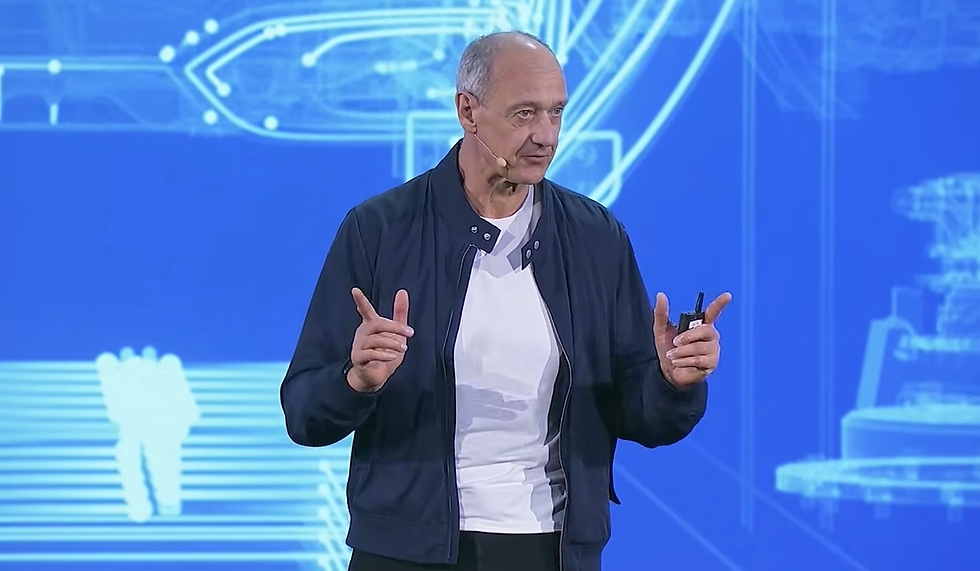
His logic is simple. Digital transformation was about reimagining processes with data. Physical AI transformation is about reimagining physical operations with intelligence. And the stakes are fundamentally higher.
"When AI enters physical systems, it is no longer just a function. It becomes a force — a force that can directly act upon the physical world."
And unlike consumer AI: "In industrial AI, hallucinations are not acceptable."
The Erlangen Milestone
In April 2026, Siemens achieved a major milestone: a humanoid robot successfully completed autonomous logistics tasks inside its electronic factory in Erlangen, Germany, for over 8 consecutive hours, with a success rate exceeding 90%.
What made this possible?
Simulation-first development: The hardware development cycle was cut from 18–24 months to just 7 months, by optimizing virtually before building a single physical prototype.
Full industrial integration: The robot wasn't a standalone gadget. It communicated with production systems and other automated vehicles in real time.
Edge AI: Real-time decision-making without relying on cloud latency.
Beyond the Pilot
The Erlangen pilot is part of a broader strategy: digital twins first, then Physical AI at scale.
Siemens' Digital Twin Composer allows companies to build virtual environments that mirror physical factories in real time. PepsiCo is already using it to digitize US production and warehousing — identifying up to 90% of problems before construction begins, achieving 20% throughput improvements, and reducing capital expenditure by 10–15%.
Accenture: The Systematization
Another validation comes from Accenture, which launched its Physical AI Orchestrator at NVIDIA GTC.
The concept: create live digital twins of factories and warehouses, use AI agents to generate insights, and convert those insights into precise instructions for physical equipment.
Early results from adopters:
20% throughput improvement from optimizing conveyor flow
15% capital expenditure reduction by eliminating trial-and-error redesign
Virtual testing of production conditions is faster than physical equipment
What This Means for Business
The Leap
The fundamental shift is captured in this comparison:
AI on Screen | Physical AI | |
Environment | Virtual | Physical |
Failure cost | Reset | Real-world consequences |
Sensors | Perfect data | Noisy, incomplete |
Execution | Software | Hardware (robotics) |
Challenge | Strategy | Strategy + Safety + Speed + Precision |
The Implications for Digital Transformation
Digital Transformation | Physical AI Transformation | |
Testing | A/B testing, Pilots | Simulation + Digital twins |
Risk | Moderate (Brand, Investment) | High (Safety, trust, liability) |
Data | Abundant, structured | Sparse, noisy, real-time |
Execution | Process + Culture change | Hardware + Operations + Safety |
Timeline | Years to a decade | Years to a decade |
Conclusion: The New Frontier
Roland Busch got it right: "AI will impact the 21st century like electricity impacted the 20th."
But we need to be precise about which AI we're talking about.
For the past decade, enterprise AI has been about chatbots, dashboards, and screen-based analytics. The next decade is about embodied intelligence - AI that interacts, moves, and makes decisions safely in our physical world.
Sony Ace proved the technology is possible. Siemens' Erlangen pilot proved it can work in factories. Accenture's Orchestrator proved it can be systematized.
The question for every business leader is no longer whether Physical AI will arrive. It's whether your organization will be ready when it does.
This article draws on Sony AI's Nature publication on Project Ace, Siemens' VivaTech 2026 keynote and Erlangen factory deployment, and Accenture's Physical AI Orchestrator launch.
Download the two-pager summary ->


Comments